
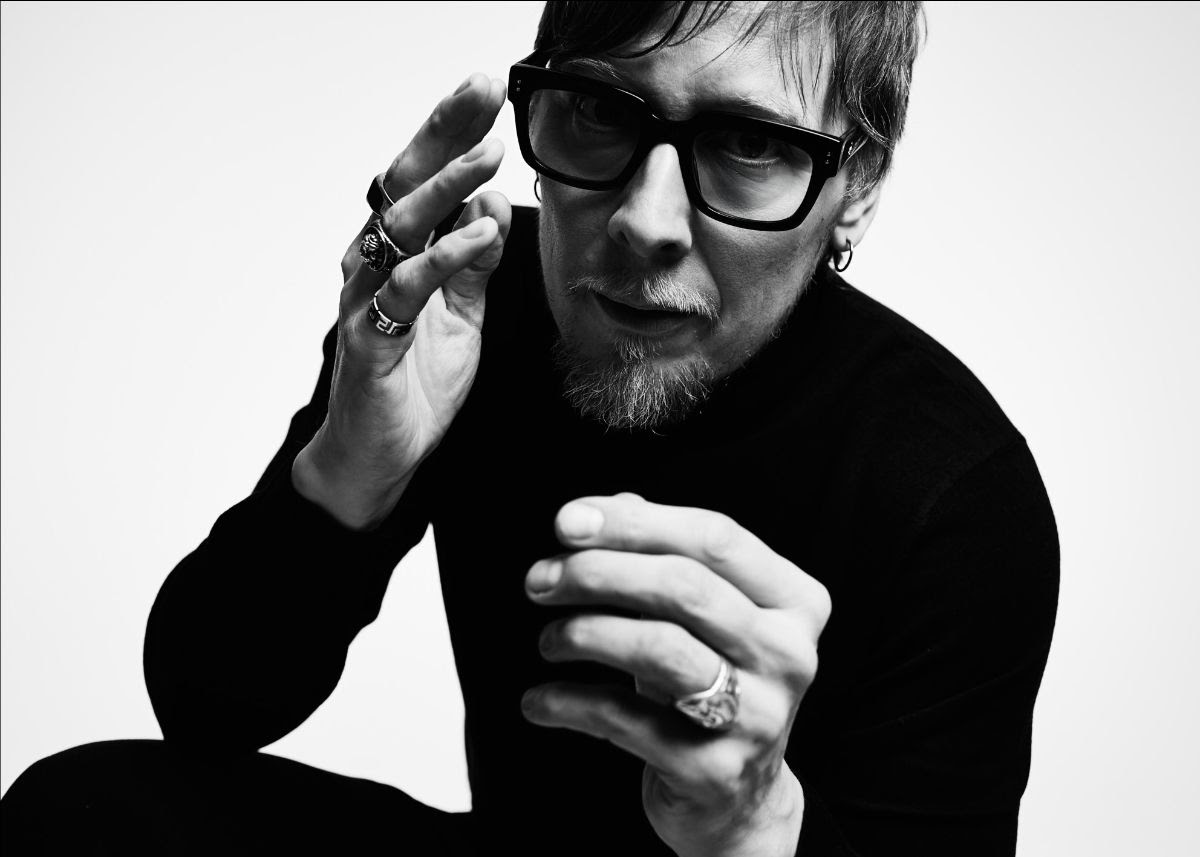
Rami Helin, known for his work with, among others, TURUN ROMANTIIKKA and THE FLAMING SIDEBURNS, recently released his first solo effort, “The Joyful Apocalypse.” We chatted with the artist about the release. Read the complete interview below…
Hi there! Thank you so much for taking the time to do this interview. How are you doing?
Well, thank you for having me. It’s been a busy month with the album release and getting the live band together.
You recently released your solo album, “The Joyful Apocalypse.” How have the reactions been so far?
The overwhelmingly positive reaction to the album has been heartwarming. When you put so much time and effort into creating something like “The Joyful Apocalypse,” which is anything but fast-food music, and still find an audience for it, it’s been a very nice surprise. I feel that people are hungry for music like this after all. It’s catchy music, but with major twists and great lyrics by Will Shade.
After a long career in bands like TURUN ROMANTIIKKA and THE FLAMING SIDEBURNS, why did you decide to make your first solo album now?
It had been planned for over a decade, but I just couldn’t find the time or energy to do anything outside the mothership. COVID changed everything, and after the first year of the plague, when the bands were running on a low flame, I found myself starting to write music again. I rediscovered my lost mojo, and the ideas started to pile up.
You’ve described “The Joyful Apocalypse” as possibly your first and last solo record; why frame it that way?
I don’t think I ever said that. I already have plans for the next album, and it’s not going to be “The Joyful Apocalypse Part 2.” It will still be singer-songwriter music, but after such a massive concept album, I feel the need to create something different. I’ve also started writing more on piano instead of guitar, and that has given me many more colors to my palette.
How did your diagnosis of otosclerosis in 2017 change the way you listen to and create music?
Not that much. I do have to be more careful about protecting my ears when rehearsing and in concert situations. I’ve been using an in-ear monitoring system, and it helps a bit, but it’s still a learning process to sing with earbuds. The diagnosis also taught me to be kinder to myself. Because of otosclerosis, I’ve had bad tinnitus for nearly two decades, and for years I blamed myself for causing it.
When you suddenly lost hearing in one ear during the recording process in 2023, what went through your mind?
It was something I knew would probably happen eventually, but it was still scary as hell. I had problems with my balance a couple of months before it happened, so there were signs. There was hope because the operation usually fixes the problem, but in my case, everything went downhill. I’m still learning to cope with the situation, and it’s too early to say what will happen in the future.
Did your hearing loss affect the way you composed, arranged, or produced this album?
Everything was on hold for a couple of years. I couldn’t sing or play music. I also had to go through the mixing process with a bad ear that kept distorting, so it was a huge challenge.
The album is described as a “handmade” response to the AI era; what does that mean to you in practical and philosophical terms?
For me, it felt natural that this album had to be written and played by real humans in a real studio environment. There were no shortcuts. I wanted to make an old-school singer-songwriter album, and that’s how those records were always made. While this album was in progress, the whole topic of AI in music started to grow, but I didn’t think about it that much until the album was already finished.
Why was it so important for you to work with real musicians instead of using samples or digital shortcuts?
It’s just my taste. I prefer music and sound that includes the little imperfections in tuning and timing, because that makes the music more pleasing to my ears. With heavyweight musicians involved, that was never a problem anyway. I can enjoy pop or heavy music that has been edited to perfection, but that’s a totally different feeling from what I’m after. I also wanted to create work and opportunities for musicians and studios during the difficult COVID-19 period. That was important to me because there wasn’t much going on in the music business at the time.
With such large-scale orchestration, how did you maintain a coherent artistic vision throughout the project?
I worked as a producer for several years, but I had never been involved in a production on this scale. This was an all-in type of situation for me. I had been planning this album for a decade, so I had a pretty clear picture of where I wanted to go, but of course, music can take you to places you don’t expect. I never knew I had an a cappella song like “Tollin’ Bells (Black Death Blues)” in me. “Walk on Water” was a surprise, too. A lot of influences from film music and chamber pop started to pour into the writing through the lyrics that spoke to me.
I usually started by reading the lyrics over and over again until I could find the rhythm and the purpose. Most of the time, the better the lyrics were, the better the composition turned out. In the end, the real challenge was selecting the album from more than 50 songs we wrote with Will. Some of them didn’t fit the themes I was after, but I also had to leave out good material just to make the album more balanced and focused. So it wasn’t simply a “best of the bunch” situation.
What was it like collaborating with arranger Niklas Hagmark on the orchestral parts?
Oh man — he’s the champ. I met Niklas while touring with SAIMAA a few years ago. He was the first and only option for this job, and I was delighted that he agreed to do it. He understood exactly what I was after and ran with it. There were some amazing ideas in his arrangements, and I made sure the orchestral parts would dominate the sonic picture, even if it meant that other elements had to be buried or edited out.
For example, there were some really cool spaghetti-western-style guitar parts in “City of Seven Hills” that I had to cut just to make more room for the orchestra and vocals. I guess I tend to like things a bit too loud in the mix. In Phil Spector’s wall-of-sound productions, there are always details like that — a noisy, reverberated mess, in a good way. Niklas’ work, however, was very sharp and focused throughout. He also wrote the choral parts, so there was a lot to do. I’d love to work with him again and see where this collaboration could go.
You brought together an impressive group of professionals; how did these collaborations shape the final sound?
I played everything myself on the demo tapes and was already happy with the arrangements, but after playing with Mikko Määttä, Jakke Saarinen, and Juha Kuoppala, I realized the music could go to places I hadn’t expected. If the musicians shine on the tracks, you shine too, because it’s your name on the cover. That means I wanted to give them room to bring in their own ideas and try things out before I said yes or no. In that kind of environment, musicians are much more willing to give their best, and that really shows in the final result.
The album deals with war, cruelty, and Europe’s darker history. Why did you feel compelled to explore these themes now?
The concept had been in my mind for over a decade, so it’s really an unfortunate coincidence that we are in such a dark geopolitical situation right now. This is a path Europe has gone down again and again throughout its history. The themes on the album reflect those recurring cycles, where the same visions of war, cruelty, and power are played out in different times and places, affecting all kinds of people — from the rich to the poor, from the powerful to the weak.
As a Finnish artist, how do you see Finland’s place in Europe at this moment in history?
Our neutral status after WWII, which we had been somewhat accustomed to, has effectively been wiped away. As a neighbor to the aggressor, we are now involved in many aspects of the war in Ukraine. In spirit, we used to feel more like Eastern Europeans trying to be Western, with our jeans and Yankee culture. Nowadays, that shift has completely happened: we are the borderline between East and West, Russia and NATO, so we have a huge role to play.
I often have to explain this to friends in Portugal, for example, who are on the other side of Europe but share the same values and are part of the EU. Personally, I worry more about the next generation than they do, and for good reason.
All the lyrics were written by the American writer Will Shade—how did that transatlantic collaboration influence the storytelling?
It definitely enriched the album. Will has been living around Europe for a long time, and like many American journalists and writers, he knows our history through fascination and interest. There’s more to be inspired by than just princes and castles — stories that stretch from antiquity to the present day, the human stories and the events of our times.
Will also gave me lyrics set in the Americas, and those songs turned out great as well. I’ve been playing one of them live, and I think they’ll also play a role in my future releases.
The record has been described as cinematic and epic. Did you approach it like scoring a film?
Hmm, that’s an interesting question, because I had to change my usual approach to writing. These songs were mostly written to the lyrics, and I took care to make sure they would take the listener to the same place musically that they took me when I read them.
In a way, it’s like writing to a script. I hadn’t thought about it that way before, but yes — that’s exactly what I was doing. Thank you for pointing that out.
If this were the last album you ever made, what would you hope listeners take away from it?
I want this album to be about my songwriting more than showing off my skills as a performer. I feel I’ve already paid my dues as a performer, but I’ve never been widely recognized as a songwriter outside a small circle. I hope people will discover new layers with each listen of “The Joyful Apocalypse” and pay attention to the craftsmanship of the entire LP, rather than just individual songs.
After listening, I hope they’ll take ideas and inspiration from the album into their daily lives and conversations, just like after reading a good book or watching a powerful movie.
Catch Rami Helin live:
27.3. Ravintola Sophie, Helsinki (solo)
3.4. Olutravintola Hannikainen, Turku (solo)
9.5. Nuijamies, Lappeenranta (solo)
3.7. MUSAMUSA Klubi, Semifinal, Helsinki (trio)
1.8. Jytäkesä, Helsinki (band)
Interview by Laureline Tilkin