
Swedish prog-metal juggernaut OPETH shocked some of their longtime fans with 2011’s “Heritage,” not only because the album featured no growls whatsoever, but also because the songs were a cavalcade of vintage prog with not a lot of death-metal flourishes thrown in for flavor. Then, the follow-up endeavor, “Pale Communion,” took the mustache-prog even further, but this time with songcraft that was far less of a patchwork. I guess it was around this time that the online music forums started rolling out those MÅGA slogans – “Make Åkerfeldt Growl Again.” In 2015, the band toured with a special 2-set concept, celebrating the 10th anniversary of “Ghost Reveries,” which certainly left no doubt that the dude could still growl pristine. It was probably because of these live performances that people started to speculate that, surely, the band wouldn’t release another album filled exclusively with vintage prog with no growls? Would they? Well, along came September 2016, and – voilà! They actually did. Released on September 30th, 2016, on Nuclear Blast, the band’s eleventh studio album, entitled “Sorceress,” presented an even more streamlined selection of vintage prog than those previous two albums. On “Heritage,” the band seemed rather unsure whether they wanted to sound like URIAH HEEP or KING CRIMSON, whereas “Pale Communion” resonated more strongly with the somewhat softer air of ELP, CAMEL, MAGMA, BARCLAY JAMES HARVEST, and the like. This next chapter in the band’s ongoing quest in the wonderland of prog tried to bring these loose ends together into a cohesive whole, where softer flourishes mixed with the band’s signature heavy oeuvre without sounding like a Rubik’s cube. Still, there were no growls to speak of, so the MÅGA hats were definitely disappointed, and would remain so until the band’s haunting 2024 endeavor, “The Last Will and Testament.” The rest of us OPETH fanbois welcomed the album with open arms, because – let’s face it! – the songwriting on this beast is indeed a bit tighter compared to the band’s previous two vintage-prog odysseys. Plus, even though these songs are dipped deep in vintage prog rather than progressive death metal, there is an ample amount of those lovely ol’ OPETH tropes scattered throughout the album.
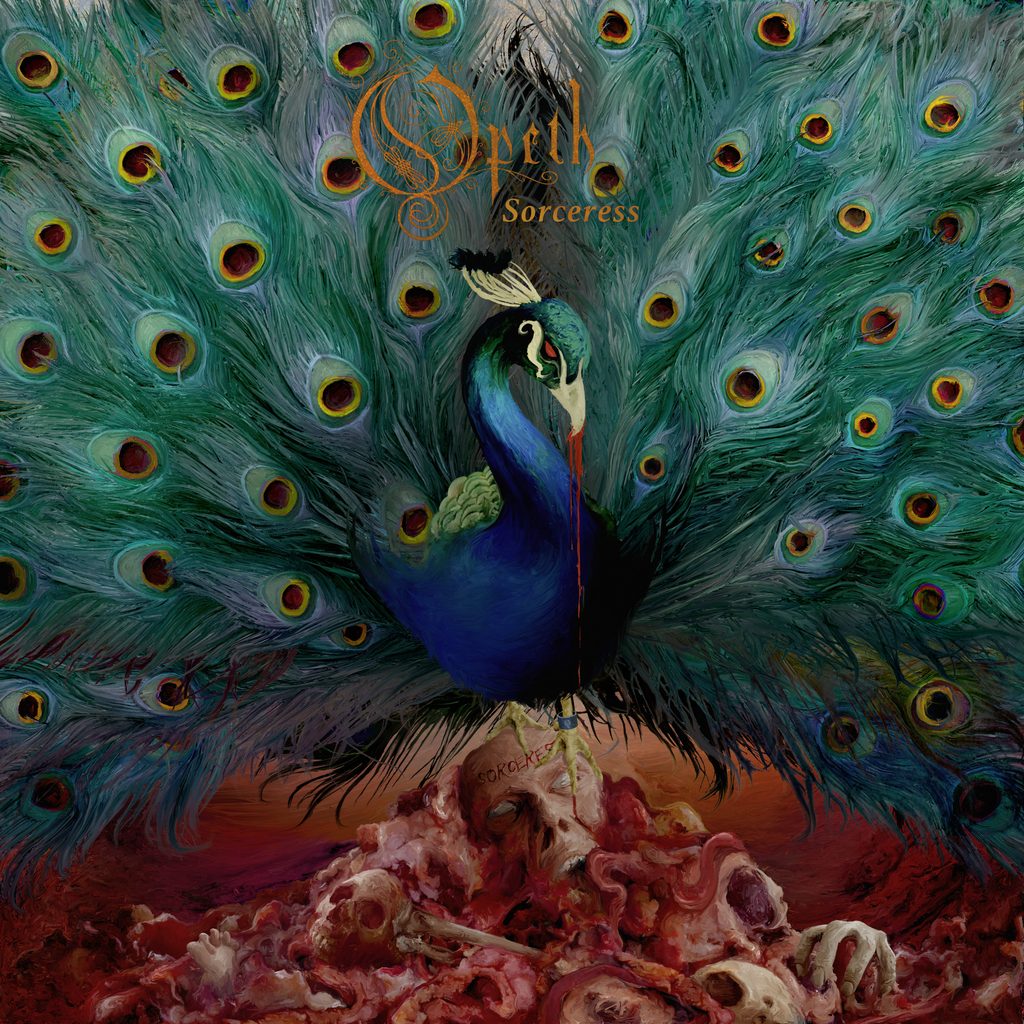
A short, medieval-sounding acoustic prelude, “Persephone,” leads to the album’s epic title track – and the band’s future live staple – “Sorceress.” The song features some of the heaviest riffs the band had cooked up since “Watershed” (2008), although the somewhat “vintage-ish” production makes these chugging stabs sound more like classic rock than death-metal origamis. Or, should I even say “muddy?” When the band plays those unisono riffs, the prog factor is the only thing that dissolves the feeling that OPETH had suddenly taken on an affinity toward stoner rock. (Yeah, if your stoner act wants to impress the audience with a fancy OPETH cover, pick the title track from this album and just drop the tempo down a bit…) The best description of the song can be found in the comment section on YouTube: “8-bit Nintendo soundtrack transforms into a sludgy/stoner nightmarish hell world, featuring priest-like vocal melodies which finish up with something out of GENESIS record.” I couldn’t have said it better myself!
Okay, I said above that the band’s songwriting took on a bit more coherent a tangent on this album. Still, this new selection of songs is quite a banquet of styles – the difference here is that, this time around, OPETH didn’t try to squeeze all these styles into a single song. Instead, the stylistic excursions appear on a song-to-song basis. For instance, “Will O’ the Wisp” takes a deep nod toward JETHRO TULL over the course of an entire song, whereas the old OPETH might have squeezed this all into an acoustic fairy-folk section in a 12-minute epic. Maybe this factors into how the album is arguably one of the most accessible OPETH endeavors of all time – I mean, for the uninitiated. Sure, the band already tried that softer and more atmospheric approach on “Damnation,” but the song structures on that album were still closer to the band’s “old style.” On this album, “Chrysalis” actually harkens back to the sound of that beautiful 2003 album, throwing in a good dose of bluesy guitar licks to boot. In general, it feels as though Åkerfeldt must’ve had a lot of vintage blues-rock records next to those obvious prog classics on his playlist while crafting these songs. Perhaps the song titles give us some hints, with “Strange Brew” possibly pointing at CREAM, and “Persephone (Slight Return)” to Jimi Hendrix, in turn, even though these songs do not explicitly pay homage to these particular legends.
I must admit to having listened to this album nowhere near as much as some of those classic OPETH endeavors from the band’s growls-era. Revisiting these songs after a good while made me realize, however, that this selection slaps harder than I probably ever gave it credit for. Along with “Pale Communion,” this album is probably the most un-OPETH-like amongst their massive discography. Nonetheless, it has a couple of real gems, and the rest of the songs aren’t too bad either. Still, the guitars could have been a tad less muddy – I mean, the subtle stoner vibe that I get here and there cracks me every time. You see, I’ve never considered OPETH to be a band whose music would pair with jazz cigarettes so well…
Written by Jani Lehtinen
Tracklist
- Persephone
- Sorceress
- The Wilde Flowers
- Will O’ the Wisp
- Chrysalis
- Sorceress 2
- The Seventh Sojourn
- Strange Brew
- A Fleeting Glance
- Era
- Persephone (Slight Return)
- The Ward
- Spring MCMLXXIV
Lineup
Mikael Åkerfeldt – vocals, guitars
Fredrik Åkesson – guitars, backing vocals
Joakim Svalberg – piano, keyboards, backing vocals
Martin Méndez – bass
Martin Axenrot – drums, percussion
Label
Nuclear Blast