
There comes a point in every legendary band’s career when the easiest path is also the safest one. After reuniting with Bruce Dickinson and Adrian Smith at the turn of the millennium, IRON MAIDEN could have comfortably lived off the success of “Brave New World” and “Dance of Death,” releasing familiar-sounding records while filling arenas with a setlist dominated by classics. Instead, on August 25th, 2006, the band delivered “A Matter of Life and Death,” an album that challenged both themselves and their audience. Looking back nearly two decades later, that decision feels even more remarkable.
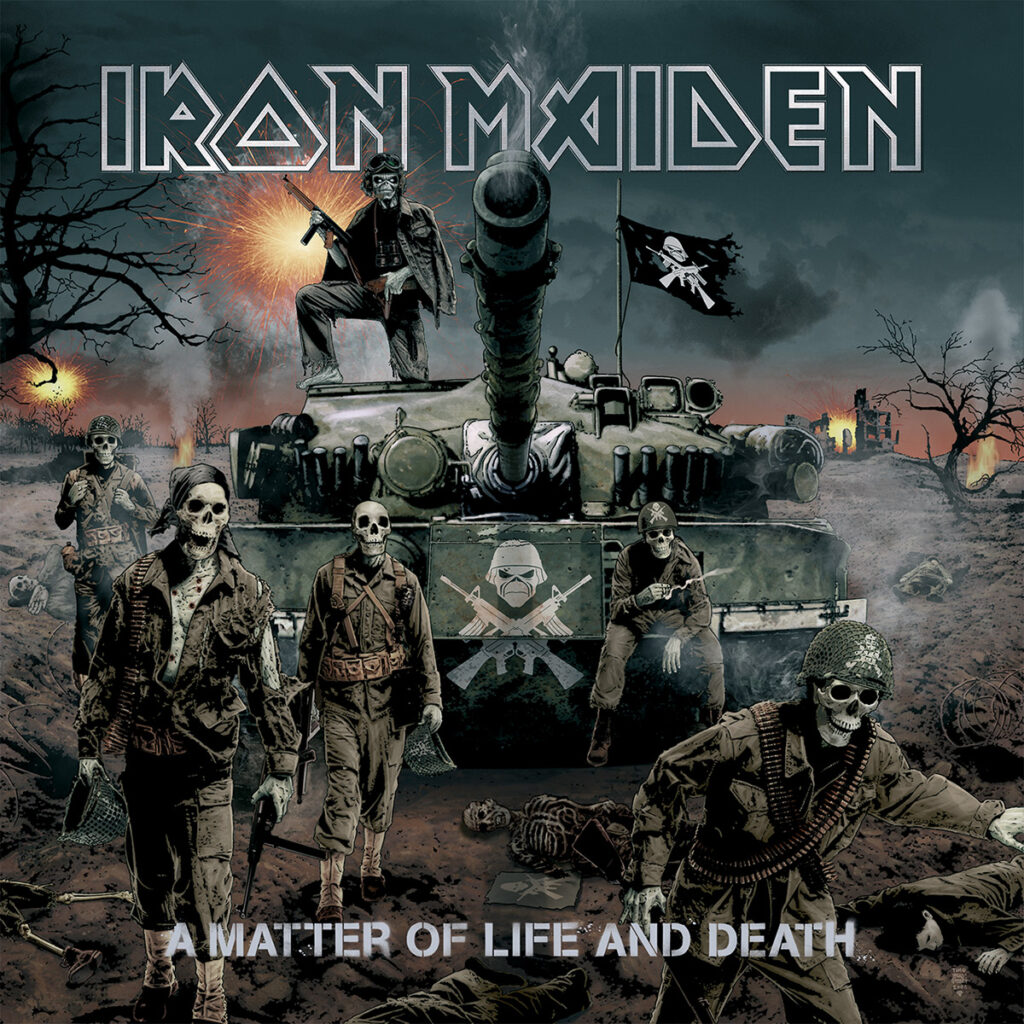
By 2006, the excitement surrounding the reunion had settled. Any lingering doubts about whether IRON MAIDEN could still write meaningful music had already been answered, and the band had regained the confidence that made them one of heavy metal’s defining acts. Rather than revisiting old formulas, Steve Harris steered the band toward one of its most ambitious releases, embracing longer compositions, darker subject matter, and an atmosphere that rarely offered easy moments of relief.
The title alone hinted that this would not be another collection of straightforward heavy metal anthems. Throughout “A Matter of Life and Death,” themes of war, faith, mortality, and personal responsibility take center stage. While these subjects had appeared in IRON MAIDEN‘s music before, never had they been explored with such consistency. Instead of celebrating battles or turning history into adventure, the album focuses on the human cost behind every conflict, reminding listeners that every victory comes with sacrifice and every decision leaves lasting consequences.
That seriousness is reflected in the music itself. Producer Kevin Shirley captured the band with a natural, almost live-sounding production that allows every instrument to breathe. The three-guitar partnership between Dave Murray, Adrian Smith, and Janick Gers feels remarkably balanced, creating rich harmonies that serve the songs rather than overshadow them. Meanwhile, Bruce Dickinson delivers one of his strongest performances of the reunion era, effortlessly shifting between restrained storytelling and commanding power whenever the music demands it.
The album opens with “Different World,” perhaps its most immediate and accessible track. Its energetic pace offers a familiar entry point before the record quickly moves into far more challenging territory. “These Colours Don’t Run” follows by exploring the realities of military service through the eyes of those standing on the front line, avoiding simple patriotism in favor of a far more human perspective.
One of the album’s defining moments arrives with “Brighter Than a Thousand Suns.” Inspired by the creation of the atomic bomb, the song combines intricate arrangements with thought-provoking lyrics, asking uncomfortable questions about scientific achievement and the responsibility that comes with it. Rather than presenting history as a distant event, it reminds us how technological progress can forever change humanity, for better or worse.
“The Longest Day” continues the album’s examination of warfare, focusing on the Normandy landings during World War II. Instead of glorifying one of history’s most significant military operations, IRON MAIDEN emphasizes the uncertainty, fear, and courage experienced by the soldiers themselves. It is this perspective that gives the song its emotional weight, transforming a familiar historical event into something deeply personal.
If one song captures the spirit of the entire album, it is “For the Greater Good of God.” Built around one of the record’s most memorable choruses, it questions how often violence has been justified through religion, ideology, or political ambition. Steve Harris never offers simple answers, and that is precisely what makes the song so compelling. It encourages reflection rather than certainty, a theme that echoes throughout the entire album.
The closing track, “The Legacy,” brings everything together beautifully. Beginning with a quiet acoustic introduction before gradually building toward an emotional finale, it reflects on the lasting impact of humanity’s choices and the consequences left behind for future generations. Rather than ending with triumph, the album closes with contemplation, leaving listeners to sit with its questions long after the final notes fade away.
Perhaps the boldest chapter in the story of “A Matter of Life and Death” came once the album reached the stage. During the supporting tour, IRON MAIDEN made the daring decision to perform the new record in its entirety before turning to the classics. The reaction was mixed. Some fans welcomed the opportunity to experience the album exactly as the band intended, while others longed for a set packed with familiar favorites. In hindsight, however, that choice perfectly reflected the band’s confidence. They believed these songs deserved to be heard as a complete work, not simply broken apart to make room for older material.
Time has a funny way of changing perspectives. Albums that once divided audiences often find new appreciation as years pass, and “A Matter of Life and Death” is a perfect example. What some initially viewed as overly long or overly serious has gradually become recognized as one of the strongest releases of IRON MAIDEN‘s reunion era. Its depth reveals itself with every listen, rewarding patience in a way that few records manage.
Nearly twenty years later, “A Matter of Life and Death” still feels refreshingly uncompromising. It is not an album built around instant gratification or obvious singles. Instead, it invites listeners to slow down, absorb its stories, and return to them again and again. In an industry where legacy bands often rely on nostalgia, IRON MAIDEN chose to keep moving forward. That willingness to take risks is exactly why this album continues to resonate today, standing as a powerful reminder that true creativity rarely comes from playing it safe.
Written by Peter Jerman
Tracklist
- Different World
- These Colours Don’t Run
- Brighter Than a Thousand Suns
- The Pilgrim
- The Longest Day
- Out of the Shadows
- The Reincarnation of Benjamin Breeg
- For the Greater Good of God
- Lord of Light
- The Legacy
Lineup
Bruce Dickinson – vocals
Dave Murray – guitar
Adrian Smith – guitar, backing vocals
Janick Gers – guitar
Steve Harris – bass, keyboards, backing vocals
Nicko McBrain – drums
Label
EMI Records