


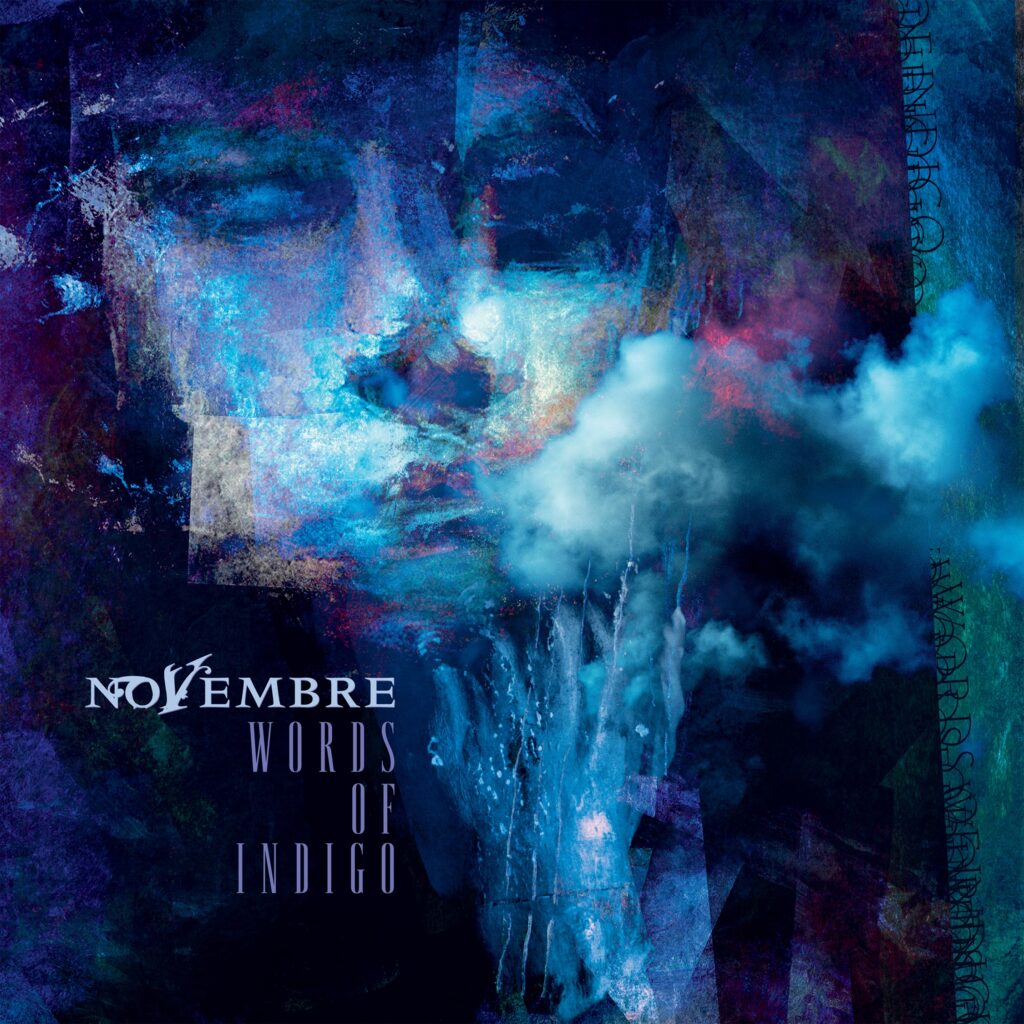
Gothic soundtrack for a rainy October night – that’s what I would call the music of the Italian equivalent to PARADISE LOST and KATATONIA, the masters of atmospheric gloom, NOVEMBRE. Hailing from the dark dungeons of death/doom since the band’s first incarnation as CATACOMB in 1990, with the brothers Orlando at the helm, the band adopted the name NOVEMBRE three years later and have since refined the delicate balance between aggression and melancholy with their signature leanings toward an almost Romantic-era classical composure – that is, heightened emotion, dramatic contrasts in dynamics and texture, and expressive, lyrical melodies. This sonic palette was somewhat epitomized already on their 2001 album “Novembrine Waltz.” My point of entry into the band’s enchanting musical realm was 2006’s progressively tinged “Materia,” however, and I’ve been a devout fanboy ever since. So, when these Italians retreated from the scene after “The Blue” (2007), it felt like a major bummer. Even more so, considering how their comeback endeavor, “URSA,” released in 2016 after the departure of their guitarist Giuseppe Orlando, somehow failed to live up to the haunting legacy of their earlier albums. I’m sure I wasn’t the only one thinking that the story of this band was practically over and done with. Now, the band is back after another prolonged hiatus with their new album “Words of Indigo,” released on November 7th, 2025, via Peaceville Records. It’s been 9 years since “URSA,” and there have been some additional lineup changes, so I must admit that I approached this new selection with caution, hoping for the best and fearing for the worst.
My fears go out the window when the first verse of “Sun Magenta” kicks in after the opener’s brief cinematic intro. While not perhaps resonating with just as much melodramatic flair as, say, those lovely bangers on “Materia,” it is nigh impossible not to feel that familiar, piercing melancholy seeping through the intricate guitar textures and, of course, Carmelo Orlando‘s trademark vocals. There’s a hint of aggression, too, conveyed by Orlando‘s harsh vocals here and there, so after nearly a decade of silence, the band welcomes the longtime fans as though saying, “We’re so back!” I read in a recent interview that the band’s frontman acknowledged the shortcomings of the previous album, most notably the imbalance between the aggression and the softer side of melancholy; further into the album, it becomes crystal clear that this issue has been tackled once and for all. It is also a huge advantage that Dan Swanö‘s golden touch in the mixing and mastering department lets the Gothic beauty of the songs really shine through.
They say that Gothic doom is inherently classical music with distorted guitars, but I have yet to come across a band that flirts with classical flourishes as deliciously as NOVEMBRE. The most obvious case in point on this new album is, of course, the brief acoustic interlude, “Intervallo,” which evokes strong vibes of Johann Sebastian Bach. However, a subtle but penetrating classical aura pervades throughout the album, just like on those earlier endeavors. The thing is, rather than opting for the pyrotechnical neo-classical guitar solos à la Yngwie Malmsteen, NOVEMBRE incorporates those Romantic passages more tastefully. Just out of curiosity, it might be worthwhile to actually try to analyze the harmonic structure of these beautifully moody songs, because the chord progressions and sonic textures tickle the ear just perfectly – plus, the album is jam-packed with über-delicious guitar lines.
One thing that separates this new selection from many of those older NOVEMBRE affairs is that the songs are quite long, clocking in around 6 or 7 minutes, and the tempos are predominantly from the slower end of the spectrum. Even the first half of the slightly faster, instrumental riffer, “Ipernotte,” feels slower than its actual tempo would suggest. This impression is only further pronounced with the song’s atmospheric middle section. Still, the album never feels bloated. In fact, after the somewhat disappointing “URSA,” this new offering feels like the triumphant comeback album that its predecessor was supposed to be. All the band’s tried-and-true fortes are present, and there’s some delicious, novel nuances to boot: “House of Rain” features Norwegian opera singer Ann-Mari Edvardsen, previously of THE 3RD & THE MORTAL, whose soprano vocals work nicely in tandem with Orlando in this somewhat Gothic-rock-esque track.
There are two standout tracks in this selection: “Post Poetic,” which blends death/doom elements with an almost HIM-esque, atmospheric Gothic rock, and “Chiesa dell’Alba,” with its haunting atmospherics and PARADISE LOST-like flourishes. I think every musician dreams that their latest album becomes a fan favorite, and with such a forceful comeback, “Words of Indigo” might actually do just that. These reinvigorated and highly underrated Italian masters of atmospheric doom/death just released their most elaborately adorned and strongest album to date, no question about it. As much as I still love “Materia,” I think I’ll be hyper-fixating on this beauty for a good few weeks from now on.
Written by Jani Lehtinen
Tracklist
- Sun Magenta
- Statua
- Neptunian Hearts
- House of Rain
- Brontide
- Intervallo
- Your Holocene
- Chiesa dell’Alba
- Ipernotte
- Post Poetic
- Onde
Lineup
Carmelo Orlando – vocals, guitars, keyboards
Alessio Erriu – guitars
Yuri Croscenko – drums
Fabio Fraschini – bass
Federico Albanese – guitars
with:
Ann-Mari Edvardsen – soprano vocals on “House of Rain”
Label
Peaceville Records