
For some peculiar reason, there is one album in OPETH‘s discography that I have practically neglected almost entirely so far. Yeah, sure, I’m one of those fanboys who got into OPETH through those Steven Wilson-produced albums boasting that pristine prog sound – “Blackwater Park,” specifically – but still, I have since traced the evolution of the band’s sublime sound back to those early albums. In fact, I’ve got all of their studio albums in my CD collection – except this one. Released on July 24th, 1996, via Candlelight Records in Europe and a year later in the US through Century Media, OPETH‘s sophomore outing remains arguably their darkest selection of songs and a unique one, too, considering its somewhat raw and murky atmosphere. Plus, the album is comprised of only five songs (not counting the bonus track), none of which run under 10 minutes! It’s not that I haven’t checked out these songs on Spotify several times, but everytime visit some online bazaar of music in order to finally get my hands on this unicorn of an album, my X-ray vision catches something far more important in the digital crates, and I end up spending all my money on something else instead. It’s almost as if this particular album is cursed or something. It’s quite strange, especially given that this album has that one epic which seems to drive the band’s fanbase totally bonkers every time they play it live. Yeah, this is the album that’s got “Black Rose Immortal,” my friends. If my memory isn’t full of holes, I think I’ve only heard the live rendition of “The Night and the Silent Water” from this album when OPETH played it at the Helsinki Icehall on the European leg of their The Last Will and Testament tour in 2025 – and, regardless of Åkerfeldt‘s referring to this older material as ”shit songs” in his trademark tongue-in-cheek manner, this epic blended right in with the newer material. So, it really puzzles me why this album is still missing from my CD rack…
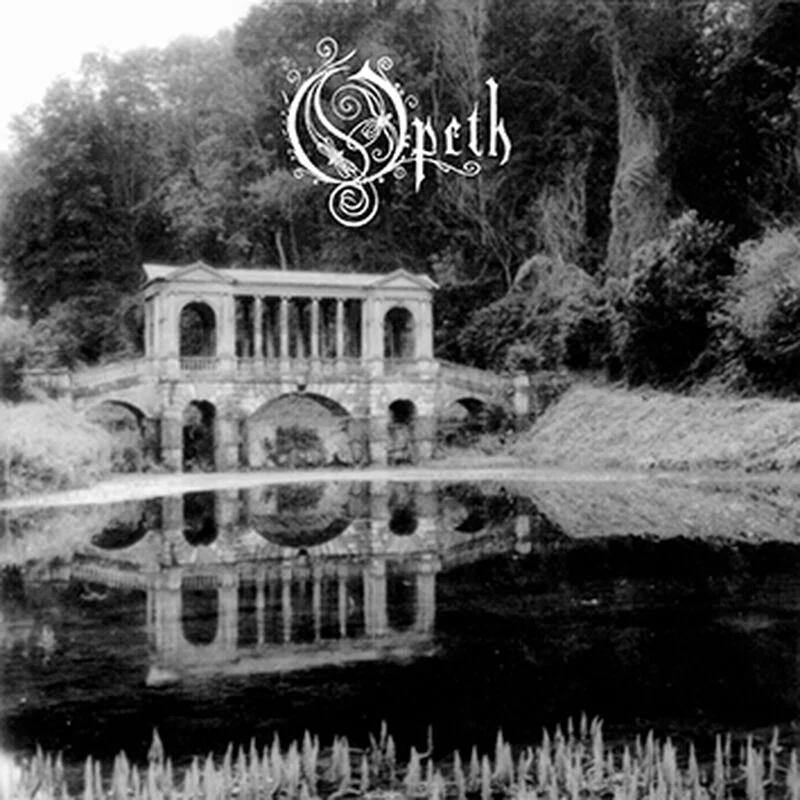
The dark sonic journey begins with a folksy, acoustic intro that leads into the 13-minute epic, “Advent.” While the song is a bit disjointed, to be honest, there are nice highlights scattered about. Bassist Johan De Farfalla does a pretty impressive job with his instrument on the opener, in particular. In a way, I understand why Åkerfeldt may not be so fond of these old bangers – the song structures are a bit haphazard, especially compared to the band’s later epics. Still, it’s quite interesting to listen to these early tracks, because you can hear traces of that latter-day OPETH sound in its embryonic stage. I must have said this a thousand times already, but the 1990s were quite a peculiar decade; an album like this might have a hard time getting a green light from the record labels in this day and age. Apart from the random, independent Bandcamp release and obscurities released through some underground prog label, you don’t see too many albums like this on the market nowadays.
On their sophomore affair, OPETH decided to tone down those dual harmonies that were a pretty iconic part of the debut. Instead of going full-on IRON MAIDEN, the band opted for a tad more dissonant black-metal-esque riffs and death-metal chugging, layered with moments of folk-prog panache that charge the album with an almost mystical-medieval feel – all of which would become the bread-and-butter of the band’s signature style on those later albums. Having found the band through those later installments in their discography, these dual-guitar harmonies sounded a bit unusual at first – I mean, coming from THIS band. Then again, there’s nothing more heavy metal than dropping some cool twin-guitar lines à la Dave Murray and Adrian Smith circa 1984. There are a couple of nice guitar harmonies in “The Night and the Silent Water,” a homage to Åkerfeldt‘s grandfather, who had passed away just recently before the making of this album. The song does indeed fit the somewhat Jungian definition of art as something that should rise far above the realm of personal life and speak to the spirit and heart of humanity. While it’s true that OPETH has explored the depths of our inner human landscape with a tad more streamlined approach on their later albums, you cannot help but be captivated by the raw emotion of this epic.
The strangest track is probably “Nectar.” Acknowledging Åkerfeldt‘s affinity with obscure, vintage prog, I’m pretty sure the song is a sly homage to the somewhat eccentric half-German/half-British prog outfit, NEKTAR. Musically, the song could not be much further from the latter’s signature space-rock noodling, but in the OPETH framework, the track is still rather odd. Some even go as far as to dub it the band’s first genuine miss, but I wouldn’t necessarily call it a dud; the song is perhaps the first hint at the band’s hiding of symphonic prog skeletons in their closet – or, at least, the first in-your-face hint. Sure, the band does not shy away from confessing their love of vintage prog here and there: the album is overall littered with subtle references not only to Norwegian black-metal pioneers, but also to pedigree British prog outfits from the 1970s.
What about the gargantuan magnum opus of the album? “Black Rose Immortal” is a 20-minute collage of pretty much everything the band had digested musically up to that point: abrasive black-metal nuances, death-metal flourishes, and folksy bits. It’s almost as though the band tried to fuse PENTANGLE, EMPEROR, and KING CRIMSON into a cohesive whole. How well they succeed in this attempt is up to your subjective preferences, but I’d sure give them extra points for even trying something this extravagant! “Morningrise” was the last album to feature the rhythm section of Anders Nordin and Johan De Farfalla, which may or may not explain why the follow-up endeavor “My Arms, Your Hearse” (1998) is a bit more true to the heavy-metal tenets of the genre. While the new members – bassist Martin Méndez and drummer Martin Lopez – were no strangers to infectious and progressive grooves, their signature styles were far less psychedelic and jazzy. Then again, at the time, the band was young – in their early 20s, I presume? – and that is the period when you’re prone to experiment more wildly, yes?
By their second studio album, OPETH had become something of an established metal act in Sweden, but they didn’t yet get much recognition elsewhere (except for some weird Finns, perhaps?). That time would not come until their international breakthrough, the aforementioned “Blackwater Park.” I was blissfully unaware of this band at the time, so I’m not sure how the metal community received this weird album at the time of its release. Quite frankly, even by the prog standards, it is quite weird, no matter how you try to approach it. That said, it is weird in a rather nice way, though. What other Swedish metal albums came out in 1996? “Crimson” by EDGE OF SANITY and “The Jester’s Race” by IN FLAMES. In retrospect, it’s quite clear that OPETH had their very own thing in the cooker, albeit it would take a few more years to perfect it. There’s very little these albums have in common, save for the occasional twin-guitar harmony or a passing melodeath-esque riffage. I reckon this sophomore outing was a building block for the band’s future success. I doubt OPETH could ever have achieved something like “Blackwater Park” without going through these weird experiments on “Morningrise.”
Written by Jani Lehtinen
Tracklist
- Advent
- The Night and the Silent Water
- Nectar
- Black Rose Immortal
- To Bid You Farewell
- Eternal Soul Torture (Bonus Track)
Lineup
Mikael Åkerfeldt – vocals, guitars
Peter Lindgren – guitars
Johan De Farfalla – bass
Anders Nordin – drums, percussion
Label
Candlelight / Century Media