


There was a time, some 15 years ago, when post-metal was the hottest talk of the town, and the scene spawned new bands to the point of oversaturation. Even in Finland, we had more than a few bands layering their music with all the hallmarks of the sub-genre: tribal drum grooves, sludge riffs, shimmering post-rock passages drenched in cavernous reverb, and epic song lengths. Some went even so far as to apply the long-form approach to the song titles, as well, so that they read like mini novellas – a trait more common in the post-rock circles. Then, something happened. Except for a very few bands, the post-metal realm has been practically dead for quite a while now: some bands disappeared entirely, some dropped the metal sound altogether. I became very fond of the post-metal aesthetic, so every time I come across a new bunch that toots the horn for this particular sound, it is mandatory to check them out – and in the fortunate case that the band in question turns out to be as mind-blowing as the elder gods of the post-metal pantheon, it calls for a celebration! Hailing from Barcelona, Spain, SYBERIA is the latest gem that I unearthed by accident from the dark dungeons of post-metal just now, and, following the release of their critically acclaimed 2022 full-length “Statement On Death,” their new album, their fifth overall, proves beyond a shadow of doubt that there is still juice in this sub-genre. The album was released on January 30th, 2026, via the band’s new label, Moment of Collapse, after a stint on Metal Blade, and after only a preliminary spin with these tracks, you’ve got to hand it to the guys: instrumental post-metal hasn’t sounded this good for ages!
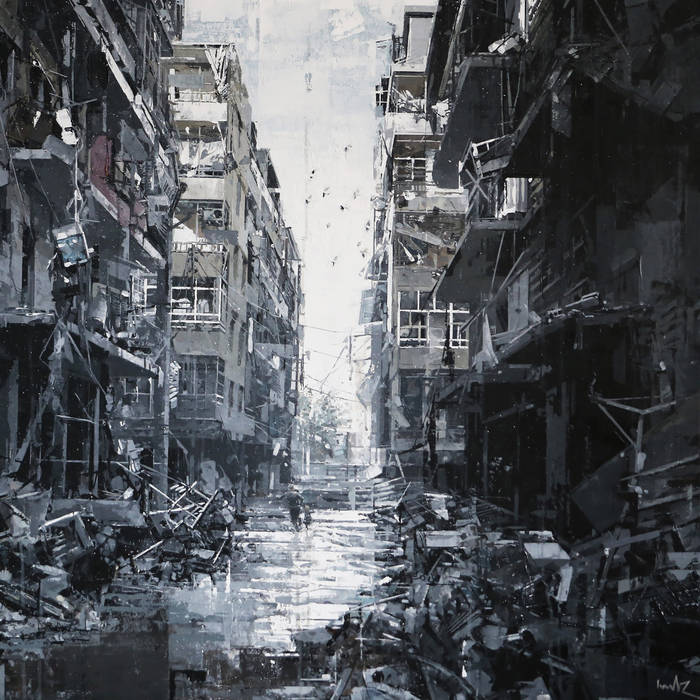
The album is entitled “Quan tot s’apagui,” which is Catalan for “When everything goes out,” and, for the first time, SYBERIA has opted to include all song titles in Catalan as well. It sure adds a nice layer of mystique to the music, even though it’s pretty easy to type the titles into Google Translate and see what they mean. Obviously, you can’t really say how accurate these translations are, but at a glance, they seem to radiate with a somewhat poetic tone – and since they are a bit long, they do recall some song titles by RED SPAROWES, for instance. It’s hard to say whether there is an overarching theme to the songs or not, but some of the keywords, such as “darkness,” “light,” “oblivion,” and “death,” sure might tempt you to think there is. The music is highly evocative, so I reckon it would be hard not to be completely immersed in a mental movie of your own while listening to the album.
The album opens with “En la foscor una llum que brilla,” which roughly translates to the somewhat poetic line, “In the darkness, a light that shines.” This could refer to anything from the psychological concept of a dark night of the soul to certain Bible verses or anything in between. Musically, this 9-minute epic builds tension from full-on ambient, cinematic soundscapes to pile-driving sludge riffs. While the song does briefly resort to the gold standard of the genre, the tribal rhythms recalling CULT OF LUNA, mostly the vibe is closer to the “Panopticon” era ISIS. What makes SYBERIA stand out from the rest is their strong melodicism. I learned that these guys released their debut “Drawing A Future” already in 2013, and if their earlier work is anything like this, I wonder why the heck I have not heard from them earlier! (Even if it isn’t, my circle of post-rock-oriented friends should have informed me about this band at some point, because you know the type: they dedicate most of their spare time to digging out obscure bands that only five people in the world know about…)
“llampecs d’oblit d’uns records en vida,” in turn, translates to “Flashes of oblivion of some memories in life,” and rather than being a sly reference to Roy Harper‘s 1974 album “Flashes From the Archives of Oblivion,” I reckon the title could refer to some sort of temporary amnesia – a jamais vu seizure, perhaps? It is a rather unsettling sensation when something utterly familiar suddenly feels completely strange, the opposite of déja vu, like feeling out of sorts in your own home. Considering the other titles, the overarching narrative could be about the ephemeral nature of life and our struggle with coming to terms with it. The song, however, feels comfortably familiar with its immersive soundscapes, like an amalgamation of latter-day CULT OF LUNA and the aforementioned ISIS classic. The synth adds a nice, cinematic flavor to the crushing riffs. At its most intense, the drums take on an almost black-metal-tinted tangent, which is quite unusual for a post-metal affair – nice!
Next up, “naixença d’una mort tranquil-la” translates as “Birth of a quiet death,” and it kicks off with a hard-hitting riffathon that would be right on point in any of those early-2010s CULT OF LUNA albums. Later, things mellow out quite a bit for a delicious, Middle-Eastern-flavored atmospheric section before the riff comes back with a vengeance. As for the song title, for me, it is subtly reminiscent of T.S. Eliot’s famous poem “The Hollow Men,” which states, “This is the way the world ends, not with a bang but a whimper.” These post-rock and post-metal bands are renowned for hiding literary references in their songs, even when there are no actual lyrics. The progression that kicks off around the 4:50 mark, with those lush synths, is pure ear candy in my books – for the obvious reasons; I might be slightly biased here, but I’ll say this anyway since I didn’t write any of the songs: I couldn’t help but think of the Finnish post-metal juggernaut, CONSCIOUSNESS REMOVAL PROJECT, whose live keyboardist I used to be from 2009 to 2013. Some would rather not have synths in their post-metal brew, but I’m not one of those people – and if you’re going to use synth textures to a resonant effect, you’d better use them exactly like this! As for the song’s title, a quiet death could be anything from a fantasy or science-fiction trope to an euphemism for something rather sinister, but whatever it is, it certainly requires to be addressed with a song as emotionally charged as this banger.
The penultimate track, “Dins la meva ànima la sang em bull,” is one of the two longest epics in this selection. Translated, it means “Inside my soul, my blood boils.” Need I convince you at this point that the song surely does live up to the mental imagery conjured by its title? By now, the band has pretty much laid out their cards, so there are no surprises; the song is a tight riffer with a few atmospheric sections, as per the conventions of the genre. There is a poignant undercurrent of melancholy that runs through the whole album, but this is one of the tracks where it feels even more penetrating.
Finally, the album closes with “quan me’n vagi no em tanqueu els ulls,” which translates to “When I leave, don’t close my eyes.” Well, I think it’s pretty obvious what the song is about – the final exit of the protagonist. The part about keeping his eyes open could be a mere movie trope, but it sure as hell has a dramatic effect. So, anyway you look at it, it seems a lot like this album is about the individual’s journey into oblivion, the final moments when memories start to disintegrate, and the light in the darkness begins to dim. The crushing weight of the riffs, the melodic depth, and the atmospheric melancholy sure work wonders in this context. These five tracks unfold as a meticulously paced balancing act between the shimmering, fragile beauty of clean guitars, drenched in cavernous reverb, and the violent eruptions of emotion conveyed by the sludge riffs. I’d say this is instrumental storytelling of the highest caliber.
Written by Jani Lehtinen
Tracklist
- En la foscor una llum que brilla,
- llampecs d’oblit d’uns records en vida,
- naixença d’una mort tranquil-la.
- Dins la meva ànima la sang em bull…
- quan me’n vagi no em tanqueu els ulls.
Lineup
Oscar Linares – guitars
JordiOnly – guitars, synth programming
Quim Torres – bass
Manel Woodcvtter – drums
Label
Moment of Collapse Records
Links
https://www.facebook.com/syberiaband