


“I’m late! I’m late! For a very important date! No time to say hello, goodbye! I’m late, I’m late, I’m late!” Even though I received AURI’s album well in advance — thanks to an earlier interview with the band — I’m late with this review. Why? Perhaps it’s because their self-named rabbit hole music is exactly the kind of music that makes you pause and wonder what to write about it. I wanted to let it simmer, like brewing a good cup of tea: some teas need longer steeping to reveal their full flavor. After seeing them live, I feel like I’ve let it steep long enough to finally collect my thoughts.
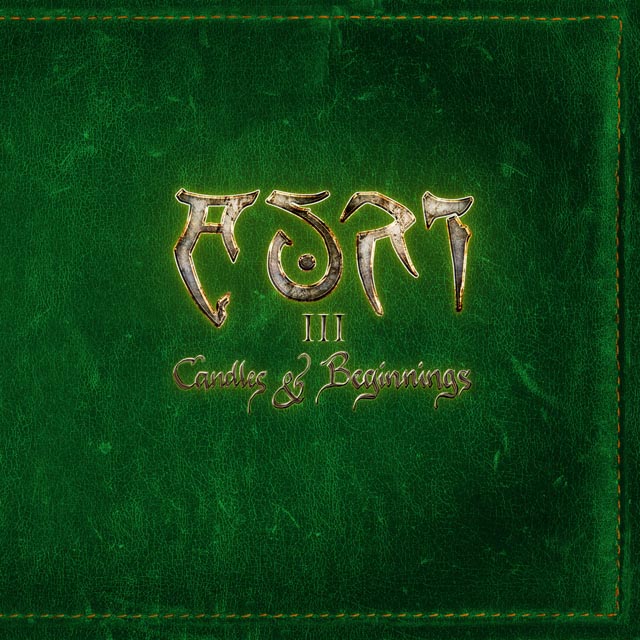
AURI, the trio of Tuomas Holopainen, Johanna Kurkela, and Troy Donockley, recently released their third studio album, “III – Candles & Beginnings”, on August 15th, 2025, via Nuclear Blast Records. It’s an album that continues to explore their signature “rabbit hole music” — whimsical, intimate, and just a little magical — a perfect companion to their first-ever live tour.
The first song, “The Invisible Gossamer Bridge,” immediately sweeps you into AURI’s only-cozy-vibe-allowed universe, a space where every note feels carefully placed like a lantern on a forest path. It’s a heartwarming opener, full of atmosphere, and at times it even flirts with the kind of ethereal serenity you might expect from ENYA; delicate, magical, and oddly grounding all at once. The track slowly unfolds like stepping onto a shimmering bridge that might vanish if you look too closely, each instrument and vocal layer adding to the sense of walking between worlds. Johanna Kurkela’s voice glides effortlessly over Tuomas Holopainen’s keyboards and Troy Donockley’s gentle pipes, creating a feeling that is both intimate and vast.
The album quickly shifts gears with “The Apparition Speaks,” which proves that those who insist AURI is a metal band aren’t entirely wrong. There are genuinely heavy riffs here, giving the song a metal-esque weight without ever becoming overpowering. Coupled with Johanna’s ethereal ooohs and aaahs, it takes on an otherworldly, almost eerie quality — more mysterious than frightening — as if spirits might just be listening along with you. It’s an intriguing contrast to the tender warmth of “The Invisible Gossamer Bridge,” showing that AURI can simultaneously cradle you in a magical cocoon and hint at hidden, shadowy corners of their musical world.
“I Will Have Language” opens with Johanna Kurkela’s gentle humming layered over abstract, drifting soundscapes, before delicate keyboard melodies start chiming in. At first, there are no actual lyrics — just a cascade of ooohs and aaahs (for lack of a better term) — creating an effect that feels almost like church music, but without any hint of actual religion. It’s the kind of song that lulls you in, wrapping you in its atmosphere before revealing its secrets.
The track moves with a subtle sense of progressiveness, as sections flow seamlessly into each other with tempo shifts so gentle you barely notice them. After the initial vocal passages, a violin emerges to carry an instrumental section, adding a delicate, almost conversational layer. Lyrics finally appear around the four-minute mark, as if to remind us that language itself is a journey — a multi-phase creation we rarely see in its raw, evolving form. Listening to it, I couldn’t help but think of my own language, Dutch, with its tangled roots and lost variants that now sound like gibberish to me.
It’s a track that asks patience and rewards it: slightly harder to grasp at first, but deeply satisfying once it unfurls. Among the many treasures on “Candles & Beginnings,” this one stands out as a personal favorite, a miniature adventure into sound, voice, and the art of storytelling sometimes even without words.
“Oh, Lovely Oddities” brings back that delicious sense of mystery, particularly in the verses, before blossoming into an absolutely magical chorus. The song is built almost entirely around Johanna Kurkela’s vocals, and she has a lot of fun with them, weaving multi-layered harmonies that occasionally sound a little spooky. “Libraries of Love” is another of AURI’s longer offerings, clocking in at just over six minutes, and it takes a slightly more straightforward approach compared to some of the album’s more ethereal tracks. The vocals are less atmospheric here, giving Johanna Kurkela’s voice room to shine with clarity, and the song has a more clearly defined structure that gently guides the listener from beginning to end.
Then the album takes a really delightful turn with “Blakey Ridge,” which has quickly become one of my new favorite AURI tracks. It’s irresistibly danceable, catchy, and for some reason, it instantly conjures that scene from The Lord of the Rings where Merry and Pippin are reveling at the Prancing Pony while Frodo tries desperately to stay unnoticed. Were we living in medieval times, this would almost certainly be a pub-style drinking song, sung loudly with friends around a wooden table, mugs in hand. The folky, playful energy of the track captures that feeling perfectly, even across modern speakers. I couldn’t help but think, when seeing this live, what a shame it is that the concert is mostly a seated affair — there were no tables to jump on, no room to fully dance along to this little slice of fun.
After this lighthearted affair, “Helios,” has a bit more of that dark folk approach, starting off with pipes, how does Troy make this sound so effortlessly? Then there’s a guitar that follows that reminds me a little more of the bluegrass-infused rock music that Robert Plant of LED ZEPPELIN has been doing these days. This track is another 6-minute ride, but none of it feels boring.
“Museum of Childhood” immediately brings to mind that iconic opening of The Lion King — you know, the part with the soaring Zulu vocals — though whether AURI actually used Zulu or invented their own playful language is anyone’s guess (well, except maybe for the people who actually speak Zulu). Regardless, the track radiates that same sense of cinematic wonder, tinged with nostalgia and awe, perfectly fitting its title. There’s something about it that feels like stepping back into a memory-filled gallery, where every note is a carefully placed exhibit of joy, curiosity, and a touch of magic. It’s a gentle, wistful moment on the album that reminds you of the wonder of being young — or for some of us, at least young at heart.
The first single released from this album was “Shieldmaiden.” At just three minutes long, it might seem like a quick, easy listen — but it actually took me a little while to fully get into it. The “challenge” of a band like AURI is that every album, every song, feels like a new adventure: you never quite know what combination of sounds and moods you’re going to encounter. I’ve heard plenty of people say that no one really has anything negative to say about this album, and I’m inclined to agree — there’s nothing truly bad here. But if I had to pick one subtle difference between AURI’s earlier releases and “Candles & Beginnings,” it’s that this album leans even further into quirky territory. Some tracks eschew traditional structure, a few are less immediately catchy, and several take time to reveal their charms. For some listeners, that might be a challenge, and it’s also exactly why writing this review took so long; it’s not always straightforward, even for someone who mostly listens to prog.
The album closes with the eleven-minute epic “A Boy Travelling With His Mother,” a finale that feels as expansive and cinematic as its length suggests. Knowing that the band are fans of Vangelis, it’s impossible not to hear echoes of “Chariots of Fire” in the sweeping melodies and stirring atmosphere, which only makes me love it all the more. Johanna Kurkela’s storytelling shines here, even though she doesn’t sing extensively; when she does speak or intone a phrase, it feels weighty and deliberate, like dialogue that belongs on the soundtrack of a film. This is the kind of track that makes you imagine the visuals yourself.
Altogether, “Candles & Beginnings” is an album that might not open its doors easily on the first listen, but once you step inside, it rewards you with a whole universe of sound and atmosphere. It feels like AURI have leaned even further into the pure artistic freedom they’ve been championing since day one; the freedom to follow inspiration down whatever rabbit hole or forest path it decides to wander. This record has a little bit of everything: lighthearted folk-dance charm in “Blakey Ridge,” a brush with heaviness in “The Apparition Speaks,” and sprawling, cinematic storytelling in “A Boy Travelling With His Mother.” It’s an album that doesn’t just ask to be heard; it asks to be lived with, simmered on, and revisited, again and again. In short: it’s AURI doing exactly what only AURI can do: building bridges made of gossamer, filling libraries with love, drinking a pint at Blakey Ridge, and inviting us all to get just a little bit lost along the way. And really, what better soundtrack could there be for a rainy evening, a hot cup of tea, and a well-deserved moment of escape?
Written by Laureline Tilkin
Tracklist
1. The Invisible Gossamer Bridge
2. The Apparition Speaks
3. I Will Have Language
4. Oh, Lovely Oddities
5. Libraries Of Love
6. Blakey Ridge
7. Helios
8. Museum Of Childhood
9. Shieldmaiden
10. A Boy Travelling With His Mother
Lineup
Johanna Kurkela | voices, violin, viola, keys
Tuomas Holopainen | keys & backing voices
Troy Donockley | guitars, bouzouki, mandola, uilleann pipes, low whistles, aerophone, bodhran, keys, voices
Label
Nuclear Blast Records