

In this day and age, I guess even the most exorbitant hermit knows that JINJER is from Ukraine, but what might not be so well-known is the fact that the country hosts a nice array of profoundly interesting black-metal outfits, too. LABYRINTHUS STELLARUM, for instance, is arguably the best psychedelic black-metal act there is – or has ever been, for that matter! Then, DRUDKH is one of the finest atmospheric black-metal acts around at the moment. Since their latest album, “Shadow Play,” was one of the highlights of last year, it is high time, now, to plunge a bit deeper into their back catalog. As it happens, their fourth studio album “Blood in Our Wells” celebrates its 20th anniversary on March 23rd, 2026, and out of all the band’s endeavors so far, this particular beast still seems to get a lot of love from the fans and critics alike. Even those black-metal aficionados who think the sophomore album, “Autumn Aurora” (2003), remains their magnum opus to this day, almost unequivocally agree that “Blood in Our Wells” did come pretty damn close. Some have even gone so far as to claim that, on this particular album, DRUDKH‘s music resonates thick with the air of BURZUM‘s canonized black-metal classic “Filosofem.” Well, I’m not even a tr00-kvlt black-metal fan, and to me, the album truly is a gold-tier treat in terms of emotion and atmosphere. So, let’s dig into this beautiful and sad gem.
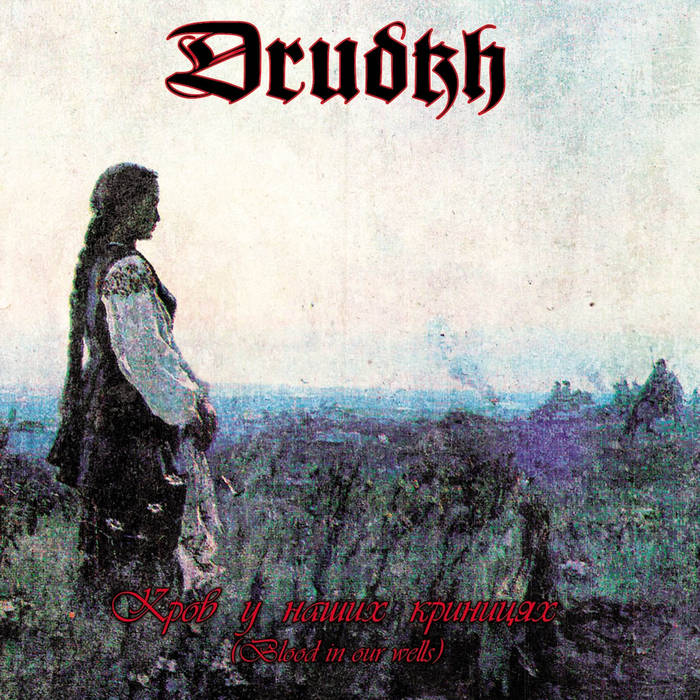
In addition to the album’s overwhelming, slow-paced melancholy, there’s one distinct aspect that’s hard to miss: DRUDKH seems to take pride in their nationality through the music and lyrics. However, it’s not the type typically associated with black metal. Nope, this is pretty far from the notorious NSBM stuff and closer to what AMORPHIS has done with the Finnish national epic, Kalevala, over the years. The album’s title comes from a line in a 1935 poem by Oleh Ozhych, and the lyrics are mostly adapted, more or less verbatim, from Ukrainian poems, with some of them dating back to the 1800s. The national romantic feel is pronounced even further by the album cover art. It is a painting from a 19th-century painter, Vasily Perov, entitled “Seeing Off the Dead Man.” Several tracks sample the Ukrainian poetic film Mamay (2003), and not only does the inlay cover of the CD edition contain the text of a 1957 patriotic poem of Ukrainian poet Vasyl Symonenko, but the band also dedicated this endeavor to the memory of Stephan Bandera, a famous WWII-era Ukrainian nationalist. I guess antics such as these could spark the ire of some people, but a black-metal band could do much worse, too.
With all this in mind, it is peculiar to note how the music is inherently layered with a lingering sense of tragedy that culminates in the occasional glimmers of hope. Given the current situation of the band’s home country, it is nigh impossible not to draw some thought-provoking parallels to the present-day Ukraine, although the album was written 20 years ago. Then again, the country has a long history of being in the middle of all sorts of geopolitical clusterfucks, so I reckon the band had a bloody good reason to sound so angry and sad at the same time.
Production-wise, the album harkens back to the pastoral warmth of “Autumn Aurora,” if you can use such a word for a black-metal endeavor. In this case, I would say it applies, at least in comparison with the somewhat more abrasive-sounding and experimental “Swan Road,” released in 2005. On this album, the folk influences blend more seamlessly and naturally with the cold and desolate black-metal riffages, too. The notes of traditional Ukrainian folk feel like the part and parcel of the whole thing, not like having been cut-and-pasted for scene points. The songs are pretty lengthy, as well, with the shortest track clocking in at 8 minutes! Such epic song structures work in the band’s favor: there’s ample time to build those haunting atmospheres. On top of the de rigueur minor-chord progressions and guitar tremolos, the album throws in a shit-ton of keyboards, too. This album is also widely regarded as the first DRUDKH endeavor to feature true guitar solos, and while they tend to lean a bit to the shredding side, the raw and triumphant vibe is nicely reminiscent of Ihsahn‘s handiwork in both EMPEROR and on his solo albums. The harmonic guitar sections, in particular, sound anthemic.
For a black-metal album that does not feature much blast-beat drumming, “Blood in Our Wells” is nothing short of a unique installment not only in the band’s prestigious discography but also in the atmospheric black-metal realm as a whole. It is a solid selection of true epics – so good, in fact, that it is impossible to single out a track and call it a highlight, because they all are. DRUDKH solidified both their legacy and admiration among the black-metal scene with this beautiful 6-track offering. Whereas “Autumn Aurora” was probably the album that made hardcore black-metal enthusiasts prick their ears, “Blood in Our Wells” proved to be the album that helped them climb to the upper echelons of metal, even for us casual black-metal fans.
Written by Jani Lehtinen
Tracklist
- Nav’
- Furrows of Gods
- When the Flame Turns to Ashes
- Solitude
- Eternity
- Ukrainian Insurgent Army
Lineup
Roman Saenko – guitars
Thurios – vocals
Krechet – bass
Vladyslav “Vlad” Petrov – drums, keyboards
Label
Supernal Music (the 2010 reissue via Season of Mist)