

Well, I certainly wasn’t expecting this: just as I started piecing together my anniversary review of one of the most seminal albums by these California metal veterans, they dropped a surprise album entitled “An Undying Love for a Burning World.” I mean, it’s been something like 10 years since their last album, so I reckon not many had it in their bingo cards that NEUROSIS would become this relevant in spring 2026! I take it that they are quite revered in certain post-metal and sludge circles. Still, in general, they are not exactly a group to name-drop when you want to impress someone – most likely, your average mainstream-oriented metal pleb has never even heard of them. In fact, even though I fell head over heels for the post-metal sound back in the day, I found this band relatively late. My gateway drug into the wonderful world of atmospheric sludge and post-metal was CULT OF LUNA‘s “Eternal Kingdom” circa 2008. For a brief moment around that time, it almost seemed that this “novel” sound would become the hottest topic in the tinseltown of metal music, even in this neck of the woods. Well, it didn’t. Then, a little bit later, I found out that one of the most pivotal albums that defined the aesthetics of this whole sub-genre for years to come had actually been released in 1996! Needless to say, I was flabbergasted. The album in question was “Through Silver in Blood,” released by Oakland sludge auteurs NEUROSIS on April 2nd, 1996, through Relapse Records. By their fifth studio album, the band that had initially set out as a bunch of crust punks in the late 1980s had evolved into something substantially heavier and more progressive. At the time of its release, I was still neck-deep in the realms of grunge and vintage prog, but looking back in time, I’m pretty sure that I would have loved this band had it popped onto my radar. The heavy and dark atmosphere resonates subtly with the air of those metal-tinged grunge monoliths, only here the darkness is even more overwhelming, relentless, and devastating. The progressive elements are equally brutal, not exactly about sly sideways glances back to the heyday of symphonic Canterbury prog.
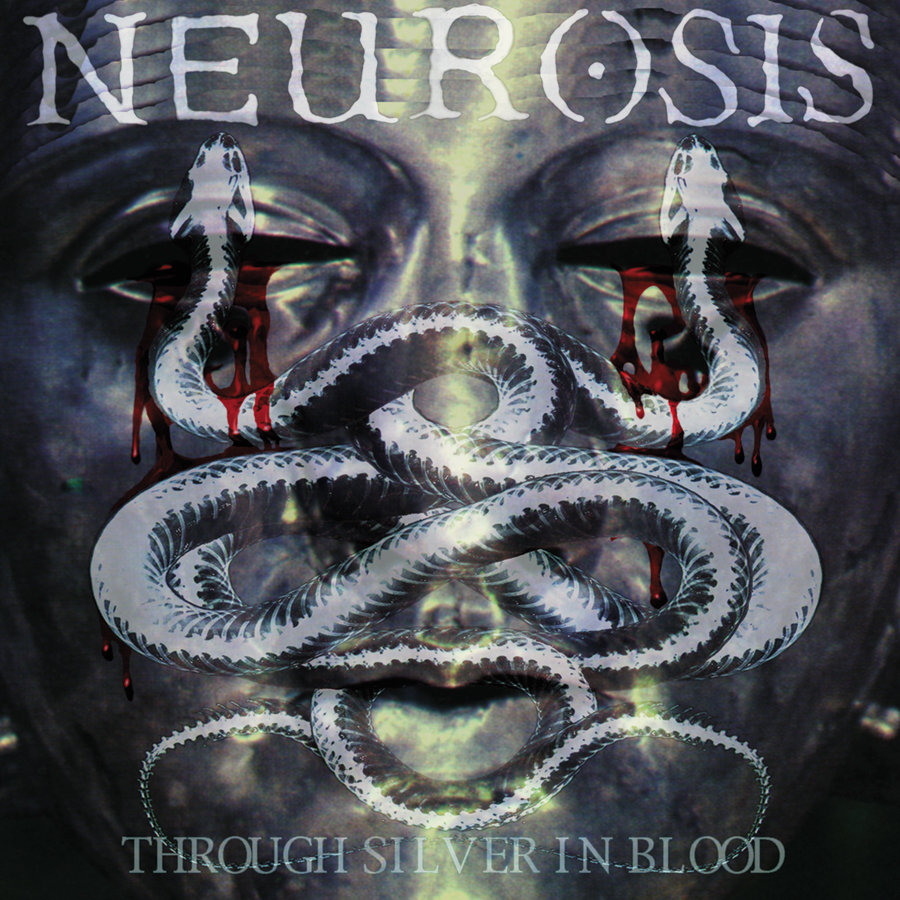
Back in the day, it felt almost unreal to find out about the album more than 10 years after its release, because its impact on the music of countless post-metal acts could still be heard so prominently. In retrospect, along with TOOL‘s “Aenima,” which was also released in 1996, this NEUROSIS album was one of the most forward-thinking metal albums of the 1990s, hands down. Oddly enough, while that TOOL classic still gets unanimous love from fans and critics alike, this particular NEUROSIS affair is rarely even mentioned anywhere in this day and age. To dub it every bit as groundbreaking a monolith as “Aenima” would be a gross understatement. At 71 minutes, “Through Silver in Blood” is merely a hair shorter, but its sonic and psychological intensity sure balances the scales. The album has been dubbed as the perfect soundtrack to losing all hope, and I would reckon such a dismal state of mind has never sounded so beautiful.
The album opens with the 12-minute title track, throwing in some nice tom-driven tribal rhythms right off the bat. This approach has since become something of an industry standard with all post-metal acts. Then again, why not? It certainly creates exactly the right vibe for the heavy sludge riffs to take over. What has not been replicated very often in later post-metal endeavors, not even by NEUROSIS themselves, at least so prominently, is the use of industrial elements on this album. Given the zeitgeist of the mid-1990s, using samples on a metal album was not exactly a novelty, but rather it was already fast becoming a cliché, largely thanks to the burgeoning nu-metal movement. NEUROSIS made this trope sound pretty damn fresh, though, with their clever use of treated samples on this album; they sound integral to its overarching evil and disorienting atmosphere. The second track, “Rehumanize,” is actually just a 2-minute sound collage comprised of samples, but it works exceptionally well as a transition from the epic opener to the oppressive riffs of “Eye.” The slinky bassline almost makes the song sound like nu-metal, only its vibe is substantially more despaired.
Speaking of nu-metal, the next epic, “Purify,” certainly has some nice and bouncy riffs that would have blended right in with those on any KORN album at the time, but the rawness factor has been geared up to max – it’s easy to see where the band originally came from. The vibe is punk, although the execution is straight-up metal – and the bagpipes are a nice touch to throw the unsuspecting listener further off balance. Yes, it’s a damn shame that I didn’t find out about this album in 1996! I would have loved it! These former crust-punks sound as though they were trying to exorcise their personal demons through these angry riff-maelstroms. I never really got into punk rock, maybe apart from a handful of individual songs from a handful of bands, but I cannot help but admire the raw, wrecking-ball energy of it, especially in a context such as this.
The feelings of raw anger and primal fear give way to a more delicate, yet somewhat bittersweet melancholy in both “Strength of Fates” and the intro to the epic closer, “Aeon.” Yet, the album is characteristically bleak. Its most characteristic trait is that of an all-encompassing darkness. NEUROSIS started exploring the extreme possibilities of such post-apocalyptic heaviness with “Enemy of the Sun” (1993), and what was already great about it, they dialed up to eleven with “Through Silver in Blood.” This selection turned out to be a landmark post-metal album at a time when the term didn’t even exist yet.
Written by Jani Lehtinen
Tracklist
- Through Silver in Blood
- Rehumanize
- Eye
- Purify
- Locust Star
- Strength of Fates
- Become the Ocean
- Aeon
- Enclosure in Flame
Lineup
Scott Kelly – guitars, vocals, percussion
Jason Roeder – drums, percussion
Steve Von Till – guitars, vocals
Dave Edwardson – bass
Noah Landis – synths
with:
John Goff – bagpipes
Martha Burns – cello
Label
Relapse Records