

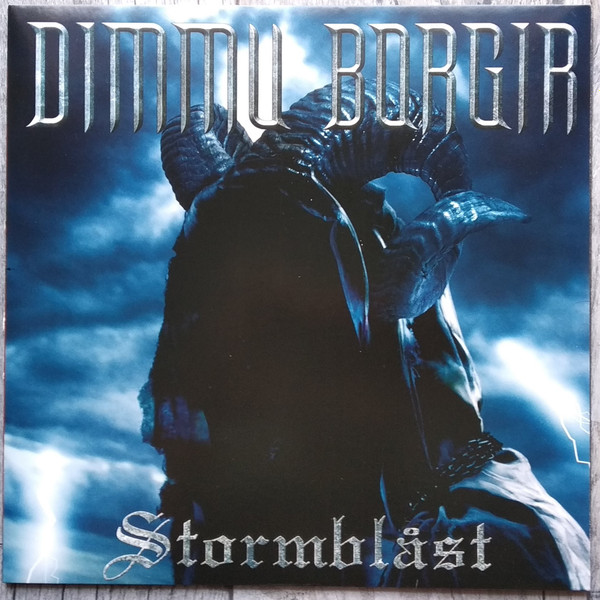
Looking back some 30 years, I couldn’t really have cared less about the novel black-metal aesthetic that was emerging from Norway in the 1990s. To the oh-so-sophisticated ear of a twenty-something music snob, this raw and seemingly simple, new metal sound lacked all the finesse of progressive metal, or even grunge. So, after checking a few bands to see what the fuss was about, I wrote the whole thing off as a fad that would die off pretty soon – minstrels of emptiness, if you will. Yeah, right. I have since grown to appreciate the raw beauty of black-metal aesthetic, and it’s quite intriguing to revisit some of these seminal albums that I once sneered at. On January 25th, 1996, the pioneering band that would become arguably the greatest behemoth of symphonic black metal, DIMMU BORGIR, released their sophomore studio album “Stormblåst,” via Century Media. Its reception at the time was a mixed bag of praise and disdain, with yours truly tooting the horn for the latter, obviously. For the tr00 kvlt black-metal fraternity, throwing in orchestral flourishes – or even piano ballads, Devil forbid! – was but cheesy theatrics, whereas the more open-minded metalheads took this very trait for the band’s greatest innovation. While the album does suffer a bit from poor production, like most black-metal albums from that era, I think it’s fair to say that history has proved the black-metal Puritans wrong. Besides, this sophomore effort sounds remarkably better than the 1994 debut, “For All Tid.” My opinion about this endeavor has changed quite drastically over the years, too. Sure, it’s not exactly the band’s crowning achievement, but, in retrospect, it’s almost impossible not to sense that this band would initiate something colossal on the metal horizon. It took a few more years until 2003’s “Death Cult Armageddon” finally set the world on fire.
I have learned that DIMMU BORGIR was something of a singular, odd duck in the mid-1990s Norwegian black-metal scene – outsiders in the genre of outsiders, perhaps? That would certainly explain why “Stormblåst” was remarkably different from the standard abrasiveness of their peers. Stian Aarstad‘s piano is an essential element in the songs, whether he plays a stripped-down solo passage or contributes backup for the string instruments. His haunting piano lines are pronouncedly sorrowful, so that, even today, “Stormblåst” stands out, in particular, for its melancholic sting. Later, it turned out that he had nicked a motif or two; the melody in “Sorgens Kammer,” a 7-minute piano ballad, was lifted from a video game, and the intro for “Alt lys en svunnet hen” had been plagiarized from the song “Sacred Hour,” by MAGNUM. In Aarstad‘s defense, it must be said that at least he had used his better judgment to steal something that worked like dark magic. The 2005 remake did not feature these stolen bits and definitely lost something in the clean-up. I can say this without the ballast of nostalgia since I didn’t even listen to this band in the 1990s. Hail to the thief, I’d say, and I’m not even the only one who thinks Aarstad is the hero on this album. He is the one summoning that delicious, sinister atmosphere for the most part. Alas, the other instruments suffer quite a lot from the poor production.
Speaking of atmosphere, this selection was the last to feature lyrics exclusively in Norwegian, and the choice of language certainly adds a distinct layer of mystique to the whole affair. I cannot understand a single line of the lyrics, but I reckon they are mostly about the usual black-metal musings: mysticism, poetic takes on ancient myths, and anti-Christian imagery bordering on Satanism, you know the drill. When you have no idea what Shagrath‘s robotic warbles or Silenoz‘s harsh shrieks are all about, the songs avoid the absolute cringest pitfall of the genre entirely – crappy lyrics.
The band’s artistic evolution in the 2 years after the debut shines through in the drum department, too; this time, DIMMU BORGIR features a proper drummer, Tjodalv. On the first album, Shagrath took care of the drumkit, and I guess there is no polite way to put it: with all due respect, the drum performance on the debut was not something to put on his résumé, whereas his goblin snarls have become nothing short of an essential part of the band’s signature sound. In fact, having seen the band on stage once, I would even go as far as to say that DIMMU BORGIR would not be the same band anymore if he ever chose to quit. Okay, this album was the first to feature his vocals, and the crappy production almost ruins them here and there, but those robotic, effect-laced snarls work nicely in tandem with Silenoz’s banshee screams overall.
Long story short, this sophomore effort solidified DIMMU BORGIR’s lineup and honed their songwriting skills a notch or two after the somewhat lukewarm debut. I’m not sure whether you could call this outing their breakthrough yet, but after “Stormblåst,” the band’s trajectory took off on a much wilder tangent. Plus, judging by the strong reactions this album ignited in the metal fraternity, the band must have done something right – you know, it’s the worst thing ever to hear someone say that your music is just okay. Even without its flaws, this album has stood the test of time rather nicely.
Written by Jani Lehtinen
Tracklist
- Alt lys er svunnet hen
- Broderskapets ring
- Når sjelen hentes til Helvete
- Sorgens Kammer
- Da den kristine satte livet til
- Stormblåst
- Antikrist
- Dødsferd
- Vinder fra en ensom grav
- Guds fortapelse – åpenbaring av dommedag
Lineup
Shagrath – vocals, lead guitars
Silenoz – rhythm guitars, vocals
Tjodalv – drums, percussion
Tristan – bass
Stian Aarstad – keyboards, piano
Label
Cacophonous Records / Century Media