

I must admit that British rock chameleon David Bowie did not mean that much to me until I came across his twentieth studio album in the mid-1990s. Released on September 25th, 1995, “Outside,” subtitled “The Nathan Adler Diaries: A Hyper-Cycle, or the Art-Ritual Murder of Baby Grace Blue” marked the first collaboration between Bowie and producer Brian Eno since the legendary “Berlin trilogy” in the late 1970s (which I obviously had to check out as soon as possible at the time, after realizing the musical genius of this dynamic duo). Eno‘s working methods were already notoriously unorthodox, so the making of this album started with a visit to the Maria Gugging Psychiatric Clinic in the province of Lower Austria, a place famous for the naivist “Outsider” art of its patients. Obviously, the album’s heading derived from there, and the initial recording sessions, which were improvisations mostly, eventually produced something like 35 hours’ worth of material, from which the record label whipped Bowie to materialize some proper and more accessible songs. On an interesting side note, this album marked the return to the so-called “Oblique Strategies,” a method used on that famous late-1970s trilogy. The lyrical concept derived from an assignment from the Q Magazine: in late 1994, they asked Bowie to keep a diary for 10 days, and, regarding the life of an international rock star too boring, Bowie penned a fictional diary of a detective named Nathan Adler. Sounds artsy, eh? Well, the mid-1990s’ Zeitgeist was a strange mixture of Twin Peaks and cyberpunk nihilism, and, as it happens, this album does capture that mood very efficiently.
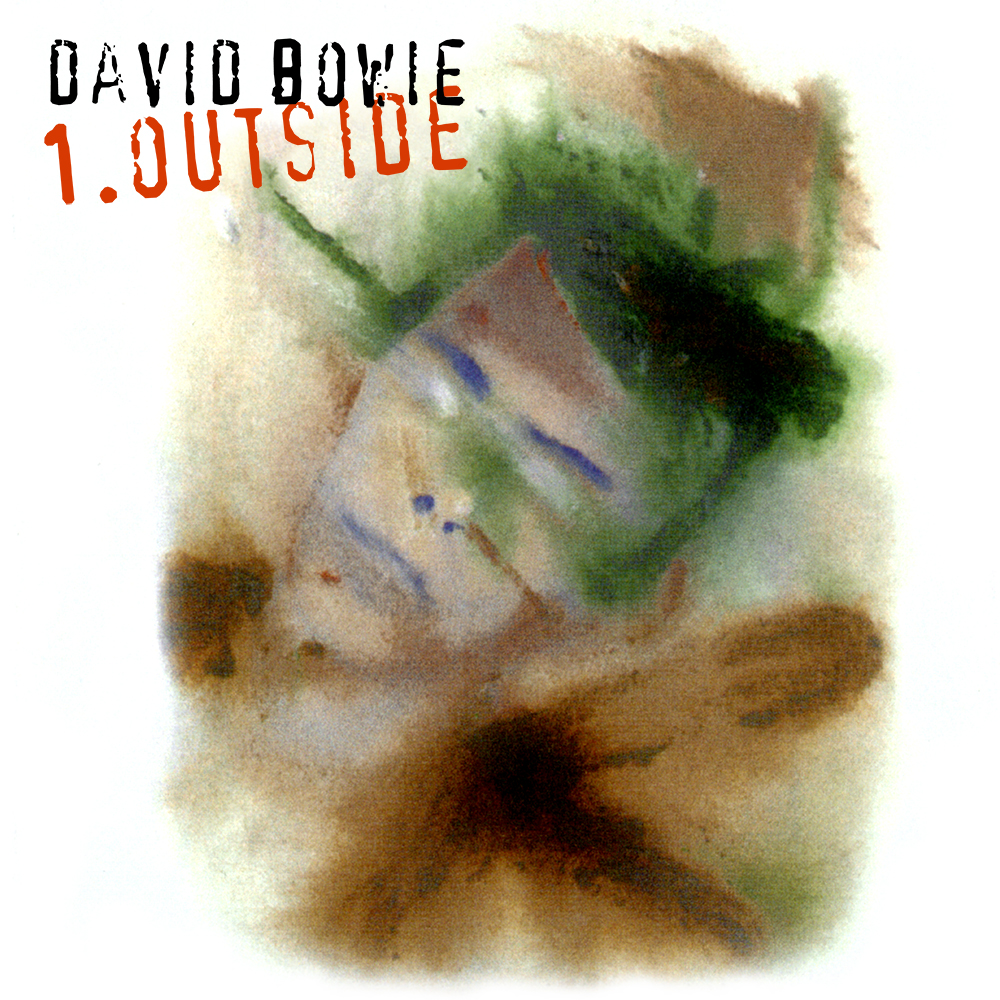
The album’s dark, industrial rock resonates with an almost NINE INCH NAILS-like air, tapping into the collective anxiety surrounding the impending new millennium, or the pre-millennial tension as it was called, in a very cinematic, soundtrack-esque fashion. Hence, some of the album tracks are quite short, interlude-type of things, one of which leads into the first actual song, the album’s title track, right off the bat. The title track doesn’t maybe adhere so strictly to the album’s overall industrial aesthetic, but it was an older song, written in collaboration with Kevin Armstrong for TIN MACHINE‘s debut album, albeit with a different title. Paired with the brief, cinematic intro, “Leon Takes Us Outside,” this mellow title track offers a rather soft landing into the album. Neither really prepares the unsuspecting listener for what is to come next.
“Hearts Filthy Lesson” is the first real banger, one through which Bowie confessed his love for NINE INCH NAILS, although with a somewhat more constrained approach to the darker side of the human psyche than you would find on Trent Reznor‘s endeavors from this era. Reznor featured on Bowie‘s “Earthling” album two years later – and with outstanding results, too. Here, the overall mood is poignantly more claustrophobic than aggressive, and I think this video single sets the tone for the album much better than the actual two opening tracks. Plus, this is the very song that kind of predicted where Bowie was going to be heading next.
While the lineup on this album as a whole is really tight, one of Bowie‘s trusted session musicians stands out rather nicely – pianist Mike Garson. His piano chops elevate some of the songs to a league of their own – namely, his classical-tinged avant-garde licks in the stomping riffer, “A Small Plot of Land,” and in the techno schlager, “I’m Deranged,” the latter of which is in the top three of the best Bowie songs of all time for me. Bowie‘s signature croonings, Garson‘s atonal jazz, and the techno beat work wonders together. The impressionistic jazz licks blended with the Twin Peaks-esque electronica of “The Motel” tickle my ear rather nicely as well.
“Outside” clocks in at around 75 minutes; so, as impressive as its highlights sound, it cannot avoid sounding a bit bloated here and there. Those transitional segue tracks with voice-overs no doubt keep the narrative going, but they do not offer much by way of musical excitement, to be honest. Only the one entitled “Segue – Ramona A. Stone / I Am With Name” sounds like a song, but perhaps that feeling stems mostly from its 4-minute length – it does come with a lot of spoken sections, and repetition to boot. It’s hard to resist the temptation of ripping the album onto the hard drive without those spoken-word tracks, if I’m being totally honest.
The highlights save the day, however. In addition to “Hearts Filthy Lesson” and “I’m Deranged,” the album comes packed with a good few bangers: “Wishful Beginnings” is a deliciously moody and atmospheric sound meditation; “The Voyeur of Utter Destruction” harkens back to the vibes of some of Bowie‘s vintage hits, with the aesthetic updated to the 1990s. “Hallo Spaceboy” is a peculiar cross between cheesy Eurodance and the sound of the original rave generation. The single version made it to the charts, even, and the later PET SHOP BOYS remix fared even better.
The album closer, “Strangers When We Meet,” had been released on the “Buddha of Suburbia” soundtrack in 1993, although this version is a bit more refined and, once again, Garson‘s piano adds a whole new dimension to the song. It brings the album to a close on a somewhat more hopeful note. This album version was also released as a single, and it’s a real bummer that its B-side was not included on this already gargantuan treat. The thing is, I would have exchanged those segues for the reworked version of the vintage Bowie classic, “Man Who Sold the World.” That 1995 version of the song sweeps the floor with the original, thanks to the haunting new electronica arrangement, but – alas! It was only released as the B-side of the “Strangers When We Meet” single, which is by far one of the hardest Bowie releases to find in this day and age.
Challenging as this whole endeavor was at its time, Bowie‘s 1995 excursions into dystopian, electronic spheres were received with mixed, if not lukewarm reactions; even though the general public’s attention span had not yet been reduced to the 15-second TikTok video at the time, many found the album’s concept a bit artsy and dense. “Outside” peaked at number 8 in the UK charts and number 21 in the US, which wouldn’t have seemed so bad for someone else, but this was David Bowie, for fuck’s sake! The album sorely lacked instant hits, albeit some of the singles did fare quite well later, and this was reflected by the somewhat muted audience reaction during the associated tour. I was already acquiring a taste for the weird back in the day, thanks to the diverse music department of the Helsinki main library, next to which I was living in 1995. So, this album was the very gateway for Bowie‘s sprawling discography for me, which is probably why I revere it with a bit more passion than the others. Later, this Bowie album has been re-evaluated in a more positive light, and its innovative musical ideas have been given their due praise. Quite frankly, even with its obvious flaws, “Outside” is a killer album, and, in retrospect, it is easy to see how it paved the way for the more streamlined electronic approach on “Earthling” in 1997.
Written by Jani Lehtinen
Tracklist
- Leon Takes Us Outside
- Outside
- The Hearts Filthy Lesson
- A Small Plot of Land
- Segue – Baby Grace (A Horrid Cassette)
- Hallo Spaceboy
- The Motel
- I Have Not Been to Oxford Town
- No Control
- Segue – Algeria Touchshriek
- The Voyeur of Utter Destruction (As Beauty)
- Segue – Ramona A. Stone / I Am with Name
- Wishful Beginnings
- We Prick You
- Segue – Nathan Adler (I)
- I’m Deranged
- Thru’ These Architects Eyes
- Segue – Nathan Adler (Version #2)
- Strangers When We Meet
Lineup
David Bowie – vocals, saxophone, guitars, keyboards
Brian Eno – synths
Reeves Gabriels – guitars
Erdal Kizilcay – bass, keyboards
Mike Garson – piano
Sterling Campbell – drums
Carlos Alomar – rhythm guitars
Label
Virgin / Arista Records