

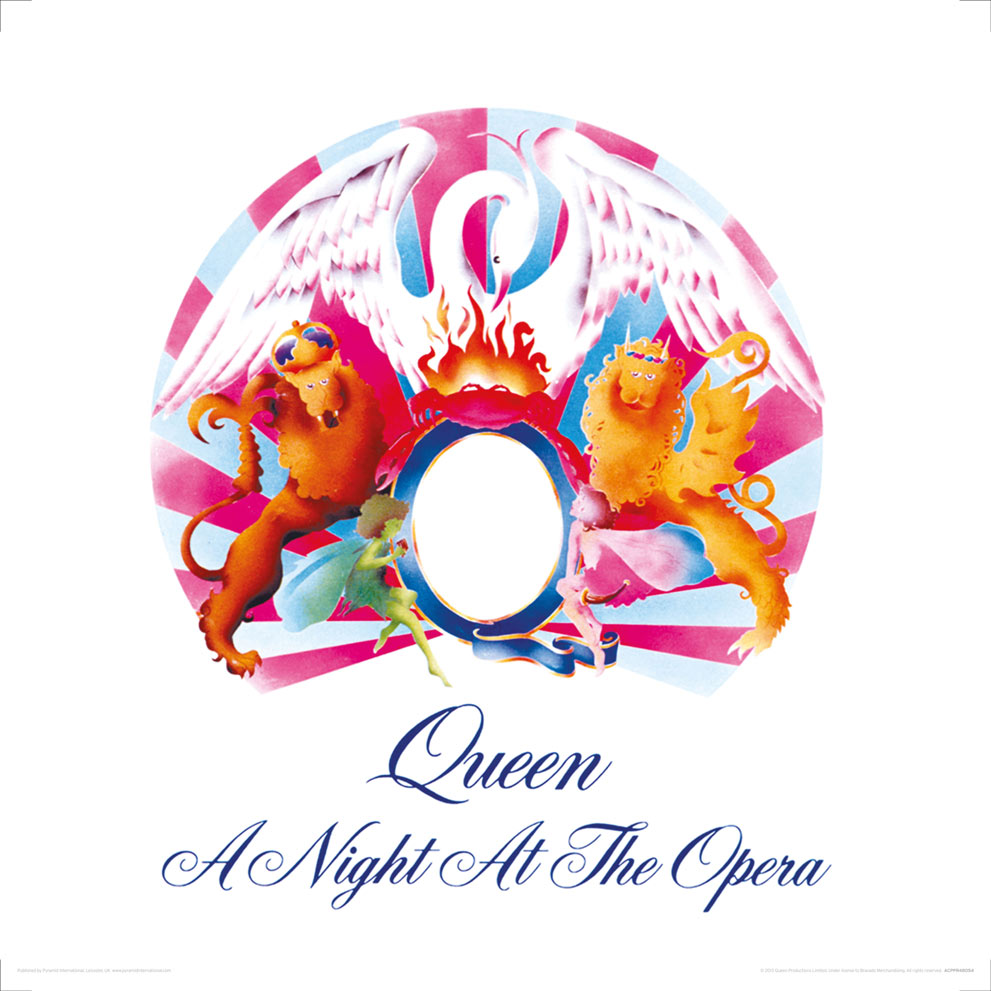
Released on November 21st, 1975, “A Night at the Opera” not only turned out to be their boldest artistic achievement, but also the biggest success at the time for the British rock royalty, QUEEN. For the 1990s kids, this album was especially important because it had THAT banger from the 1992 comedy classic, Wayne’s World, and that diamond-certified rock anthem in question was, of course, “Bohemian Rhapsody,” arguably the bangiest rock banger of all time. Suppose you saw the 2018 Freddie Mercury biopic bearing the name of the song as its title. In that case, you might recall that the band’s record label wasn’t exactly thrilled upon first hearing this operatic, multi-part rock epic that had taken months to construct. However, EMI executives decided to release the song as a single, and it went nuclear, cementing the band in the upper echelons of rock’n’roll elder gods. Their previous album, “Sheer Heart Attack,” had already hinted at the band’s musical genius, mixing ragtime and Jimi Hendrix, but on “A Night at the Opera,” the band went off the charts with their sonic experimentations. This album Matrix-dives through a gamut of styles, from the Brian May-penned sci-fi space-rock of “The Prophet Song” to the country hoke of “’39,” and to Mercury‘s vaudeville homages in both “Seaside Rendezvous” and “Lazing on A Sunday Afternoon.” The quieter members, Roger Taylor and John Deacon, each wrote a song for the album, too – the cheesy rocker, “I’m in Love With My Car,” and the frothy pop-classic-to-be, “You’re My Best Friend,” respectively. So, I guess it’s fair to say that QUEEN didn’t really take it easy on their label.
“Death on Two Legs” is a fantastic opener that pulls no punches; the lyrics spit out anger so venomous that there has been speculation over the years as to whom this song was likely dedicated to. Rumor has it that the vehement lyrics were targeted at the band’s douchebag manager, who had locked QUEEN into a slavish contract that had ensured that the band saw almost nothing in terms of royalties, let alone artistic freedom, in the early days. The main piano riff is a genius reworking of their earlier song “The March of the Black Queen,” from their 1974 album “II.” The band’s signature quirks are pretty much condensed into a single song in this banger – Mercury‘s theatrical vocal delivery, May‘s delicious guitar licks (that guitar tone!), precision basslines by Deacon, and thundering drum fills and rolls by Taylor. The song is a perfect mission statement for the album: this band ain’t about messing around!
At face value, the third track, “I’m in Love With My Car,” might seem like a joke; that 2018 biopic surely gave us that impression, but the song deserves credit for its groove, courtesy of Roger Taylor, whose raspy vocals also put the icing on the cake. Granted, like almost every other song on the album, this one, too, is profoundly overshadowed by the stellar legacy of THAT one song, but it is easily one of the best songs Taylor wrote for QUEEN. In my opinion, this rocker is no less of a goofy joke than, say, the previous track, “Lazing on A Sunday Afternoon,” in which Mercury confesses his love for the music hall and vaudeville traditions. Yeah, you don’t hear songs like this on a heavy-metal album anymore – that is, if QUEEN ever truly was a heavy-metal act. It’s pretty mind-boggling that a song like this and “Bohemian Rhapsody” were placed on the same album! The other vaudeville number, “Seaside Rendezvous,” sounds like a sequel to this song, in terms of mood and lyrics.
Legend has it that Freddie Mercury hated to play the Wurlitzer piano with a passion. That’s probably why John Deacon, who penned “You’re My Best Friend,” had to learn to play the damn thing for the song. It was the bassist’s second contribution to the band, and this no-gimmicks-feel-good-singalong-tune turned out to be a hit! The song was also the first to openly flirt with the pop aesthetic of the time, perhaps subtly heralding where the band was about to go next. While you can never over-appreciate Mercury‘s vocal power, it’s funny that the band’s most unsung member had such a knack for writing not only hit songs but also those unforgettable basslines!
Then, “Sweet Lady” harkens back to the band’s early, heavier sound. Generally, it is regarded as the weakest link in this selection, and it’s hard to disagree. The song is not fundamentally bad – it just isn’t as spectacular (or eccentric) as all the others. Plus, the lyrics have lines that are guaranteed to raise an eyebrow, such as, “You call me sweet like I’m some kind of cheese.” I mean, what the actual fuck?! Guitarist Brian May also wrote “The Prophet Song,” which is more impactful by magnitudes with its sci-fi vocals and progressive riffs. In fact, this latter May-penned banger is, creatively speaking, every bit as cool as “Bohemian Rhapsody.”
Before we get to the band’s magnum opus of a song, “Love of My Life” unfolds like a tender ballad. That said, even if you don’t like ballads, like me, you simply have to hand it to the band – Mercury‘s exceptional vocal prowess shines through in this song, so I guess it’s a no-brainer that the song has become such an iconic QUEEN classic. The follow-up, Dixieland jazz-flavored “Good Company” arguably hasn’t, probably for the same reasons that apply to a good few of the album tracks – and this one also suffered the unfortunate fate of being the very last song before THAT monolith.
Okay, then. What could I possibly say about “Bohemian Rhapsody” that hasn’t already been said a million times over? The song is like a holy relic, so I guess I’d better approach it with extra caution. What makes the song’s unbelievable success so bizarre is the fact that, unlike most hit songs, it does not follow the usual 3-minute radio hit template. It does not follow any rock conventions, not even the canonical verse/chorus formula, or anything even remotely related whatsoever, but tosses them all out the window. “Bohemian Rhapsody” is a full-blown mini rock-opera, kind of like progressive music of the era, but then again, not. The song is truly a pure mindfuck. That’s why there is no hook, not in the traditional sense, because the song, in and of itself, is the hook. The song features no repeated sections at all, apart from the “Anywhere the wind blows” refrain at the very end. The only structure to the song, as I’ve learned from some dubious online sources, follows the famed “Hero’s Journey” narrative formula created by Joseph Campbell. The magician’s trick here was to implement the formula into the musical structure, too, rather than use it only for the lyrics. I’ve seen bands use this trick quite a few times over the years, but I reckon QUEEN was one of the first popular bands to do it. Perhaps some vintage prog squad beat them to it by a year or two, but those prog monoliths have probably been buried in the dust since (only to be unearthed by zealous prog nerds some 50 years later). This one song alone makes “A Night at the Opera” worth buying if you do not yet have it in your collection, and if you’re open-minded enough, it comes with the bonus of a few more bangers – eccentric? You bet, but bangers all the same. They just don’t make records like this anymore. Oh, yeah, the closer is an instrumental rendition of the British national anthem, which, in this day and age, may seem like a cliché, but 50 years ago, maybe not so much. At least it suggests that you take your hat off when you put this record on – like you should.
Written by Jani Lehtinen
Tracklist
- Death on Two Legs
- Lazing on A Sunday Afternoon
- I’m in Love With My Car
- You’re My Best Friend
- ’39
- Sweet Lady
- Seaside Rendezvous
- The Prophet Song
- Love of My Life
- Good Company
- Bohemian Rhapsody
- God Save the Queen
Lineup
Freddie Mercury – vocals, piano
Brian May – guitars
Roger Taylor – drums
John Deacon – bass
Label
EMI
Links
https://www.facebook.com/Queenhttps://www.instagram.com/officialqueenmusic/#